


 Posts


Back from the weekend, we shared some odds n' ends. Some Japanese fellows got a machine to detect flavor, and determined that humans taste like...bacon. Someone popped a snake head into a dish at TGIFridays in hopes of landing a big ol' lawsuit. I told a story from my weekend, how L fired the hostess between lunch and dinner services, forcing me to step in to help, wearing a kilt, wet shoes, and a t-shirt a few sizes too small. It was an experience.
We got into cost control in food production. Turning the "as purchased" portion into an "edible portion" is an ordeal with a lot of opportunity for waste. If the minimum-wage prep cook is not monitored, for instance, he may cut an onion and toss out too much usable trim. It's not unusual for head chefs to pick around the garbage to inspect what is being thrown out.
Overcooking is another problem -- cook a piece of meat too long and it shrinks. Over the course of a year, one can lose 100s of pounds of meat And of course there is over serving: a bartender free-pours too big a glass, steak that's not weighed could go too big or small.
Inventory control: Without proper rotation, a lot can be wasted. "Carry over," the restaurant term for left-overs, is a big potential source of loss if not managed correctly.
The choice to make or buy something is tricky. Ice cream can be purchased, but the ingredients are relatively cheap. However, a proper batch freezer, electricity to run it, and the talent to run it are not. It's a balance that his to be determined from case to case.
Of course there are the twin buggaboos of pilferage and stealing: stealing is cut-and-dried taking stuff out of the store, either booze or cash or sides o' beef; pilfering is more casual, such as the hungry prep cook popping a few cucumbers into his mouth while getting the salad station together. Then there are the employee meals -- are they expensive to make or made with food that would go to waste otherwise?
This list killed me, as I see how the restaurant I'm at now is just being so wasteful, preventing us from getting on the goodfoot financially.
At 10pm, we had a guest lecturer, Anne Saxelby of Saxelby Cheese, a cool little cheese counter on the Lower East Side. She sounded really interesting, pretty much inventing herself as a cheese monger, but I was overtired and fell asleep.
Monday, May 11, 2009

Thursday, May 7, 2009
Food Cost / Yield Test

Class was again Chef Ted breaking down proteins. This time, he had a two sides of beef, and we did a yield test on them -- weighed before, then the trim was weighed, then calculated the real price of the edible portions. It was pretty straightforward stuff, but had it been intended for a full menu with many moving parts and recipes embedded within recipes, it would be quite a bug bear. I would have been more involved in the discussion, but I was sleepily checking in and out.
The waste on a large tenderloin of beef is amazing. We started with 9 pounds, and after the fat was cut off, the different muscles that didn't belong to the tender portion, the silver skin and connective tissues, we were left with less than 5 pounds. I asked Chef Ted out of an entire cow, how much is usable. There is relatively little prime meat on a cow, but everything is usable. From the skin into leather, the bones into gelatin, the organs and offal to vendors overseas, to stomach bile for cheese making and paint, it's all used. The meat, the steaks and burgers, are really a very very small part of the cow that we use. And the meat that is graded "prime" is only 1% of all meat produced.
Wednesday, May 6, 2009
Fish Fabrication / Training

Today was an odd day. Chef Ted came in and basically fabricated a large variety of fish in front of our eyes -- round and flat fish, a salmon, 2 lobsters, shellfish, bivalves and a squid -- things that we took several weeks to work through in culinary arts, here we were shown in 3 hours. The point was to illustrate how in the end, a whole fish is only 45 to 50% usable, and the rest is garbage. Makes one appreciate how valuable fresh proteins are. Chef also lectured a bit about how expensive some species are today that were considered garbage fish 30 to 40 years ago: skate, yellow fin tuna, cod. Back in the day, it was just salmon and Dove Sole. 99% of all shrimp in the U.S. is both farm raised and imported.
The last hour of the class was the finishing of a topic that I missed on Monday, due to the James Beard Awards. It seemed pretty self evident, but Richard presented a flowchart of sorts for job training. Determine the duties, show the duties, let the employee practice the duties, evaluate and go from there. Have written descriptions of responsibilities, blah blah blah. All very nice in an ideal world, but in the real world, you hope your staff knows what's up, and try not to give them too much rope to hang themselves with. The staff a manager hires is a reflection on how good the manager is -- it will never be better than the manager who assembles and directs them. I understand that; still, it grates on me a bit whenRichard presents this stuff like it's a formula. Real life seems so much more complicated and compromised.
Monday, May 4, 2009
Student Product Presentations / Food Cost
Due to my commuter bicycle breaking down and the F train not running because of the heavy rain, I did not get to class until 8:30, then had to leave at 9:45am to go to Lincoln Center to pick up cheap tickets to the James Beard Awards this evening. So I got to see three late student presentations -- strawberries, chicken, and a rather captivating pizza-oriented presentation about Guytano's family restaurant's home-made mozzarella. He even brought in samples, which were quite good.
So I spent the rest of the class time on line at Lincoln Center, and had some nice conversations with the students around me. One was a pastry student at my school who had a good head on her shoulders, the other was a culinary student who works in the web department of the Food Network, who seemed very young and a little bit too timid to work in a restaurant kitchen.
Later this week, a chef professor is coming in to break down chickens and help us analyze food costs further.
Thursday, April 30, 2009
More Presentations / Food Cost
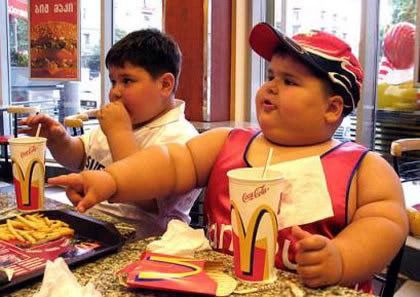
Before we started more student presentations, we rocked out an In the News Segment. Maria, she of the blackened spices presentation yesterday, led with an article from Newsday about the Larkfield Manor in East Northport. More than half of 100 guests at a Sweet 16 party became ill the day after the party. They also ate food at the kid's house, but then the next day more people became ill from a bar mitzvah held there. Before the 2nd round of sickness, the owner's response was: "Well, I eat here every day and I never get sick." His arrogance is adding up to a business killer.
George Martin Steakhouses are opening up a number of locations along the Long Island Rail Road. This led to a discussion of the history of the diner, originally a series of decommissioned railroad dining cars that were set up to continue serving at railway stations. When a train would pull up, people could run out, get a quick meal to take away, and get back on the train. Voila: the first fast-food restaurant. From this twist in history, diners continued to be built in the long, narrow 'railroad style' after the supply of old dining cars dried up.
The Times dining section on Wednesday was all about the economy. Two big articles are about cheaper, alternate cuts of meat . The first: The Beef Checkoff Council spent a million and a half dollars to figure out the "Denver Steak," a distant cousin of the NY Strip. Bruni didn't do a proper review but line-listed a bunch of upscale restaurants playing with their menus to accommodate tighter wallets. Next, in Chicago, an Alderman is objecting to a crime-themed hot dog stand, "Felony Franks", which is to be run solely by ex-cons. With historically high crime rates on the West Side, the publicity-seeking politician thinks "The Home of the Misdemeanor Wiener" is inappropriate. All publicity is good publicity for all involved.
Finally, there was in article about the worst restaurant food for kids. Fact is that 50% of all American kids are either overweight or obese (and 15% are at risk for becoming obese). A few figures to keep in mind: A small adult woman needs about 2,000 calories per day; an Au Bon Pain's "kid's"grilled cheese sandwich is 670 calories and Baskin Ronbin's kid-size M&M shake is 980 calories. Thank you to the Bloomberg administration for forcing chains and big operations to post calorie counts clearly in NYC! Just the other day, I was desiring an Icee at a movie theater. A medium was only fifty cents less than a large, but the medium was 475 calories and the large was almost 900 calories, so regardless of the price silliness, I went for the smaller one. I look forward to having the information to teach my child how to eat around a menu smartly and healthfully.
We quickly moved into more student presentations, with U.K. Sara giving an amusing talk on basil, which concluded with references to Basil Faulty and Basil Brush, a rather rude puppet character from an English kid's TV show. Valle Powerpointed an overview of goat meat, Zach had an attractive PPT on sugar (but he simply read all the text on the screen, rather than actually presenting his material in an original way).

We moved on to food costing, but not before Richard brought up a picture I sent him from my cell phone: A posting in the front door of Rice to Riches on Spring Street, which is looking for staff -- despite the rather blunt assessment of how horrible the work is!
We worked on some sample recipe cards, including a butcher test card (which accounts for different cuts of a large piece), and the market value of the different pieces....as well as the useless trim (i.e., what is lost in the cutting and/or discounted). It's pretty straightforward once you get over the measurement conversion (pounds to ounces! liters to cups!).
Wednesday, April 29, 2009
Student Product Presentations
Today started with a bang -- student presentations on various products. This is a test run for our final projects, which will be presenting a business plan for a new restaurant. Everyone chose a product, and had to present about the characteristics, grades, history, and purchasing of said topic. Richard stressed the use of PowerPoint, which some students did use, some to hilarious effect, some to...less than hilarious. Others just gave out a handout and spoke, some did...less. The topics ranged from blackened spices to mission figs to spinach to horsemeat (which only became illegal a couple of years ago). I did canned tomatoes, and exported my presentation above for all y'all to peruse. The export function didn't get the animations, in which the word "SEX" flashes over selected slides to keep things humorous -- the first, the last, and of course, the slide with a picture of a pizza.
Best of today's bunch was probably LI Jenni's, in which she shared he passion for specialty coffee -- she's a manager of a Northfork beanery, and really knows her stuff. No Powerpoint to lean on, she brought in a mess of visual aids, from a sack used to transport the raw beans to raw and roasted beans to the grading and testing. She had this cool kit of a few dozen vials of essential oils, which is used to train the coffee nose. She had samples of all different kinds of bean rejects, from insect damage to "floaters" (when the beans are washed, the ones that come to the top have gaps in their structure, which lead to uneven roasting and will give bitter tones to an otherwise properly roasted batch). I don't even like coffee, but Jenni made me want to go to a fancy coffee shop and taste a flight of brews with her.
Monday, April 27, 2009
Recipe Costing / Hiring
In today's odds n' ends, I reported on the machinations of the restaurant where I've been working as manager/kitchen captain/prep cook/expediter/inventory clerk, and also sought advice from Richard about how to quell some of the issues we're having -- in particular: where to look for a point-of-sale system, as our register is seriously out of date and inefficient. I also spoke of the Bohemian Beer Garden I visited yesterday, on the first super warm day of the year -- we got there, hungry, at 3:30 but the kitchen was closed until 4. We ordered soon thereafter and it took 45 minutes to get our food; when we got it, it was cold, dry and not very good.
Chicago Liz got laid off from the Mexican restaurant where she was a line cook -- it seems her boss was trying to cut expenses and cut back everyone's hours, but then she line-listed the restaurant's policies and habits, and how it's literally wasting money left and right. Kyle took her anti-NYC boyfriend to Masa, where he had a hard time ordering, but once he got the food, he fell in love with it and couldn't stop raving.
We then saw another episode of "Opening Soon," about a couple of ex-professional hockey players opening a steak house in Ontario. Neither of them cook nor have ever opened or run a restaurant; they also believe ketchup is the best sauce for a steak. Very odd. They pay a contractor to build out their space for an opening date in 6 weeks. Not surprisingly, the contractor takes 6 months and goes way over-budget, and who the heck pays a contractor in full in advance? After designing the place, they get a chef almost as an afterthought -- they hire the first person who answers their classified ad. The show glosses over a lot of details, but according to the rules of the show, the place must go on to be successful. (It doesn't show any of the growing pains that I've been witnessing firsthand.)
The next part of the class was dedicated to cost control and the concept of recipe costing. It's not too tricky, in an ideal world. You have a recipe; you know the quantities, price, and serving size of your ingredients; and you work out the cost of each dish. Divide that by what you sell it for (cost/sales) and blammo, you have your food cost percent.
We finished class with our last talk about hiring and selecting employees. Testing: today it is popular in many industries to give psychological tests to determine whether a candidate is trustworthy or not, with questions ranging from "Is it OK to steal?" to "Have you ever taken paperclips from the office home?" Damn, that sounds really stupid. The politics of the reference -- an HR department will only volunteer a confirmation of the dates of someone's employment and his or her title. You can ask, however, if the person "available for rehire." If the answer is no, that could be an indication that things did not work out well. Privately-held companies tend to have looser lips, but all sorts of laws prevent people from saying more.
Training is key, of course. Today in the food industry, the first introduction to the kitchen is a trail, when a worker goes in and follows someone around without doing anything, just observing. The problem with this is that by law trails must be paid. Previously, a person was given a test to see if they knew how to handle heat and procedure. A cook can be asked to make a perfectly done omelet, a baker can be asked to bake a cake -- in that, the proof is in the pudding, and legally, the trailer does not have to be paid. The first step is orientation -- welcome, job-role info., where everything is. Job training: performance standards. And finally, retraining: if the job changes, if they never did the job right, if there is new equipment or a new menu item.
Subscribe to:
Posts (Atom)